
Services
Bridges
Our bridges fill gaps from missing teeth, including fixed implant-supported options, restoring your smile's look and everyday function.

Why choose us
Benefits of Bridges
Fill the Gap
We replace one or more missing teeth with a fixed bridge that restores your smile.
Fixed, Not Removable
Your bridge stays in place, so there is nothing to take out at night.
Implant-Supported Options
We also provide fixed implant-supported bridges when that is the right fit for you.
Personalized to You
We plan your bridge around your bite, your smile, and your comfort.
Flexible Ways to Pay
We accept most dental insurance plans, self-pay patients, and offer an in-house membership plan.
When a single tooth goes missing, the teeth on either side often begin to drift into the gap, and the tooth above or below can start to shift out of its usual position. A dental bridge fills that space with a replacement tooth anchored to its neighbors or to dental implants. It restores the look of your smile and helps keep the rest of your teeth where they belong. At Arlington Dental Care, we place bridges for patients throughout Arlington Heights who want a fixed, non-removable way to replace one or more missing teeth.
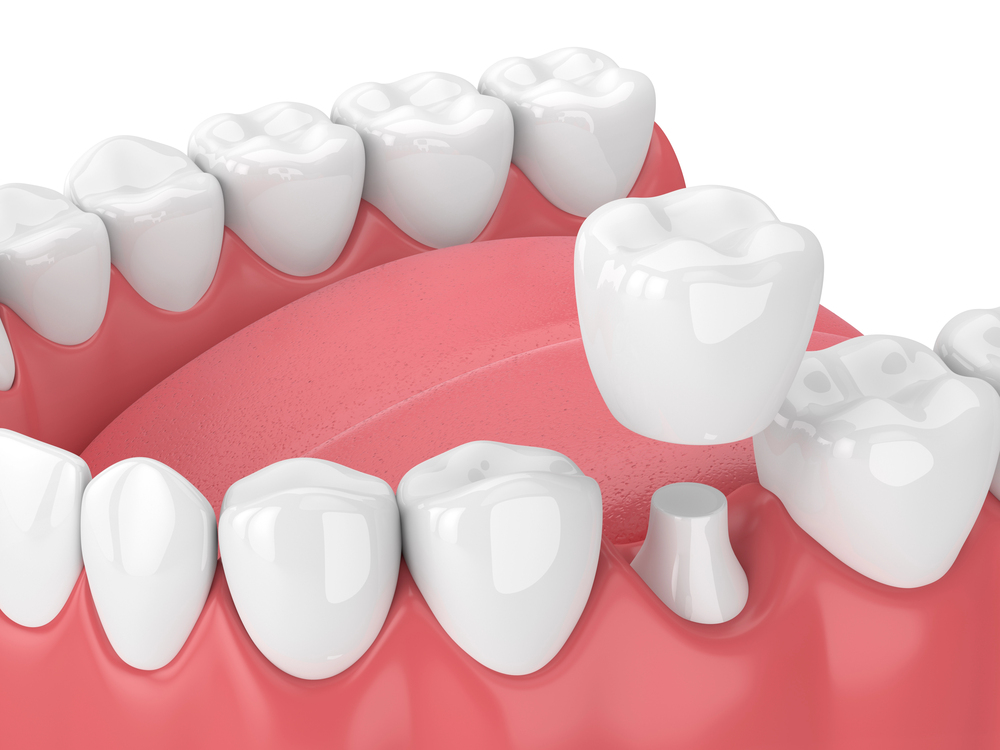
A traditional bridge is made of three main parts. The replacement tooth, called a pontic, sits in the gap. It is held in place by crowns that fit over the healthy teeth on either side, which are known as abutment teeth. Because the whole unit is bonded in place, you don't take it out at night the way you would with a removable partial denture. You brush it and care for it much like your natural teeth.
Bridges help a wide range of people. You might be a candidate if you lost a tooth to decay, if a cracked tooth had to be extracted, or if you have had a gap for years and want to close it before neighboring teeth shift further. We also offer fixed implant-supported bridges. Instead of relying on natural teeth for support, these attach to dental implants placed in the jaw. They can be a good fit when several teeth in a row are missing, or when the teeth next to the gap aren't strong enough to anchor a traditional bridge.
The most important factor is the health of the teeth and gums around the gap. For a traditional bridge, the abutment teeth need to be sturdy enough to support crowns. If one of those teeth has deep decay, we may first treat it with a filling or root canal therapy so it can serve as a reliable anchor. Healthy gums matter too. If we see signs of gum problems during your dental exam and cleaning, we will address them before moving forward.
You should also think about how a bridge fits your long-term goals. Preparing abutment teeth means reshaping them so the crowns can fit over them. Some patients would rather leave those neighboring teeth untouched, and a single dental implant may suit them better. Others prefer the stability of an implant-supported bridge for a longer span of missing teeth. Because we also provide implants, partial dentures, and full arch options, we can walk you through each choice side by side. That way, you choose the one that makes sense for your mouth rather than the only one available.
How do I take care of a dental bridge?
You care for a bridge with daily brushing, careful cleaning underneath the replacement tooth, and regular checkups. The area under the pontic can trap food, so cleaning beneath it is the one habit that matters most. Our hygienist can show you how to use floss threaders or similar tools during your visit so you feel confident doing it at home.
Here are a few practical habits that help protect your bridge:
- Brush twice a day, paying attention to the gumline around the anchoring crowns
- Clean under the bridge daily to remove trapped food and plaque
- Avoid chewing ice, hard candy, or pens, which can stress the crowns
- Keep up with routine cleanings and exams so we can check the fit and the supporting teeth
At each preventive visit, we look at how your bridge is holding up and check for any decay on the abutment teeth. Catching small issues early keeps them simple to manage. If something ever feels loose or uncomfortable, let us know. We offer emergency dental appointments when a problem can't wait.
How can I pay for a bridge?
We accept most dental insurance plans, and our team will help you understand how your coverage applies to a bridge before treatment begins. Coverage for restorative work varies from plan to plan. Reviewing your benefits ahead of time helps you know what to expect and avoid surprises.
If you don't have dental insurance, you are still welcome here. We see self-pay patients, and we offer an in-house membership plan designed to make ongoing care more accessible. During your consultation, we will explain your options clearly so you can plan your treatment in a way that works for your budget.
Who will be taking care of me?
Dr. Apurva Patel and Dr. Alexander Kletsel both focus on cosmetic and family dentistry. That means they pay close attention to how your bridge looks next to your natural teeth as well as how it functions when you chew and speak. You don't need a referral to see us for tooth replacement, and we care for patients of all ages, so your whole family can visit the same office.
If a missing tooth has been on your mind, we would be glad to take a look and talk through your options with you. Call our Arlington Heights office to schedule a visit. Our team will help you take the next step toward a complete, comfortable smile.
The process
What to expect
- 1
Consultation and Exam
We examine your teeth and talk through the bridge options that suit your needs.
- 2
Placing Your Bridge
Our team prepares the area and fits your bridge with a focus on your comfort.
- 3
Aftercare and Checkups
We share care tips and see you for regular cleanings and exams to keep your bridge healthy.
Questions
Bridges FAQs
Does dental insurance cover a bridge, and what will it cost?
Many dental insurance plans include some coverage for bridges, and the cost depends on your specific plan and treatment needs. We accept most dental insurance plans, welcome self-pay patients, and offer an in-house membership plan. Our team is happy to go over your options with you before treatment begins.
Does getting a dental bridge hurt?
Most patients find getting a bridge comfortable because we numb the area before preparing the supporting teeth. Patient comfort is a strong focus for our team, and we check in with you throughout your visit. Some mild sensitivity afterward is common and typically fades as you adjust.
How long does it take to get a bridge?
A traditional bridge usually takes more than one visit, starting with preparing the supporting teeth and taking impressions. Once your custom bridge is ready, we check the fit and bite before placing it. If your bridge is supported by dental implants, the timeline is longer to allow for healing, and we will walk you through each step.
How long does a dental bridge last?
With good care, a dental bridge can last for many years, though how long yours lasts depends on your oral health and daily habits. Brushing, cleaning carefully under the bridge, and keeping up with regular cleanings and exams help protect it. During your checkups, we keep an eye on your bridge and the teeth that support it.
Am I a good candidate for a bridge, or are there other options?
A bridge may be a good fit if you are missing one or more teeth and have healthy teeth or implants nearby to support it. Depending on your needs, alternatives we offer include single dental implants, fixed implant-supported bridges, and partial dentures. At your exam, our dentists will help you compare these tooth replacement options and choose what works best for you.