
Services
Crowns
Our team uses custom crowns to protect and restore damaged or weakened teeth for patients in Arlington Heights.

Why choose us
Benefits of Crowns
Protects Weakened Teeth
A crown covers a cracked, worn, or heavily filled tooth to help shield it from further damage.
Restores Everyday Function
We shape your crown so you can bite and chew more comfortably again.
Natural-Looking Results
Our team designs each crown to blend in with your surrounding teeth.
Completes Other Treatments
Crowns are often the final step after root canal therapy or when finishing a dental implant.
Flexible Payment Options
We accept most dental insurance plans, welcome self-pay patients, and offer an in-house membership plan.
If you have a tooth that has cracked, a filling that keeps failing, or a molar that just had a root canal, you may be wondering what comes next. Often, the answer is a dental crown. A crown is a custom-made cap that fits over the entire visible part of a tooth, restoring its shape, strength, and appearance so you can chew and smile with confidence again. At Arlington Dental Care, our team places crowns for patients throughout Arlington Heights, and we take the time to explain why one may be the right choice for your tooth.
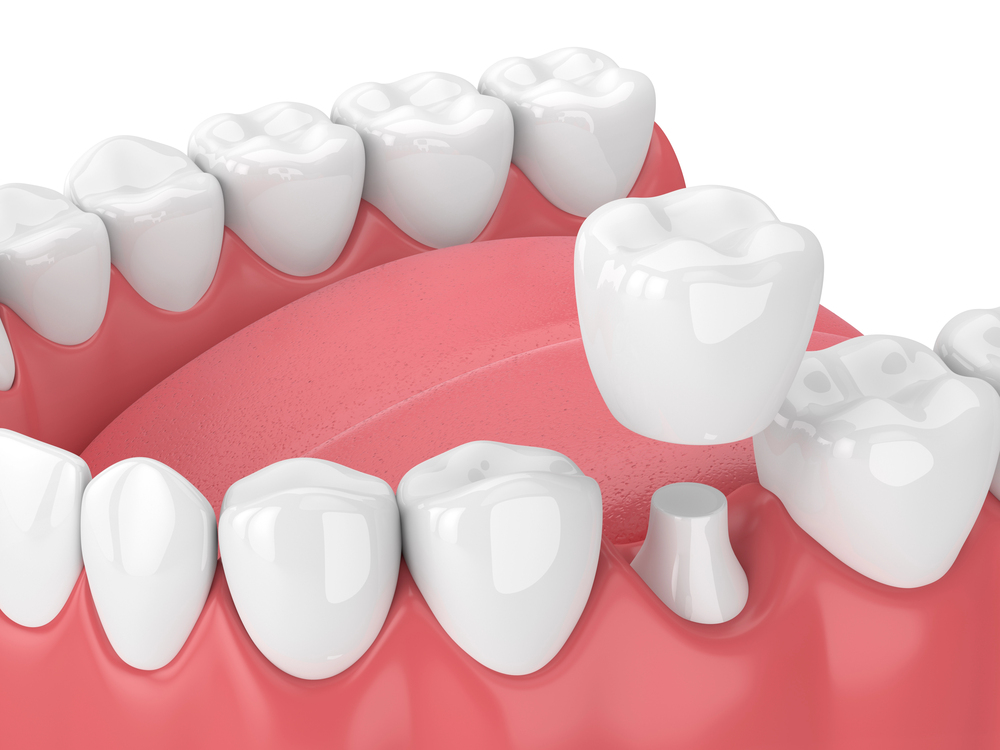
A crown covers and protects a tooth that has been weakened or damaged beyond what a filling can reliably support. To make room for it, we carefully reshape the outer surface of the tooth. The crown is then designed to match the size and contour of your natural tooth and bonded securely in place. Once it is finished, it becomes the new outer surface of that tooth, handling the everyday forces of biting and chewing.
Crowns help a wide range of patients. Some come to us with a large cavity that has left too little healthy tooth for a filling. Others have a tooth that has cracked or chipped, sometimes after biting down on something hard. Crowns are also used in other kinds of care. They often complete root canal therapy, cap a dental implant, or anchor a bridge that replaces a missing tooth. Because we offer all of these services in one office, we can plan your crown as part of your overall treatment rather than as an isolated fix.
Patients usually seek a crown for one of several distinct reasons, and knowing which applies to you makes it easier to understand your options. We see each of these situations regularly:
- A heavily decayed or worn tooth that no longer has enough structure to hold a filling
- A cracked, chipped, or broken tooth that needs protection from further damage
- A tooth treated with root canal therapy, especially a molar or premolar that takes on heavy chewing pressure
- A dental implant that needs a natural-looking replacement tooth on top
- A bridge that relies on crowns over neighboring teeth for support
- Cosmetic concerns, such as a misshapen or discolored tooth that other treatments can't address
During your dental exam, our dentists evaluate the tooth, talk with you about how it feels, and explain whether a crown, a filling, or another restoration makes the most sense. If a tooth suddenly breaks or becomes painful, we also offer emergency dental appointments so you don't have to wait to be seen.
Is getting a crown right for me?
A crown is a good fit when a tooth is still worth saving but needs more support than a filling can offer. We base our recommendation on how much healthy tooth remains, where the tooth sits in your mouth, and how you bite. A front tooth and a back molar face very different demands, and we design each crown with that in mind.
Dr. Apurva Patel and Dr. Alexander Kletsel both focus on cosmetic and family dentistry. That means we consider both function and appearance, and we care for patients of every age, from children to adults. If you have questions about how a crown fits into a larger plan, such as replacing missing teeth or restoring several teeth, we're happy to walk through the possibilities with you.
How do I care for my crown afterward?
You care for a crown much like your natural teeth: brush twice a day, floss daily, and keep up with regular checkups. A crown itself cannot get a cavity, but the tooth underneath can still develop decay along the edge where the crown meets the gumline. That is why good daily habits matter.
Routine dental cleanings with our hygienist help keep the area around your crown healthy. At each visit, we check that the crown still fits well and that your bite feels comfortable. It's also wise to avoid chewing ice or hard objects, which can stress both crowns and natural teeth. If anything ever feels loose, rough, or uncomfortable, let us know so we can take a look.
How can I pay for a dental crown?
We accept most dental insurance plans, and our team can help you understand how your coverage applies to crowns. Because benefits vary from plan to plan, we encourage you to reach out to us before treatment so there are no surprises.
If you don't have insurance, you're still welcome here. We accept self-pay patients, and we also offer an in-house membership plan that can make ongoing care more manageable. We're glad to explain how the plan works and whether it suits your needs.
How do I get started?
The first step is simply scheduling a visit. If a tooth has been bothering you, or you've been told you may need a crown, our team in Arlington Heights is here to answer your questions in plain language and help you feel comfortable with every decision. Call Arlington Dental Care today to book your appointment, and let's protect your smile together.
The process
What to expect
- 1
Exam and Planning
We examine the tooth, talk through your goals, and explain whether a crown is the right fit for you.
- 2
Preparing Your Crown
We gently prepare the tooth and take the details needed to create a crown that fits your smile.
- 3
Placement and Aftercare
We secure your finished crown, check your bite, and share tips to help it last through your regular checkups.
Questions
Crowns FAQs
How much does a dental crown cost, and will my insurance help?
The cost of a crown depends on your tooth, the material, and any treatment needed beforehand, so we review your options and estimate with you before we begin. We accept most dental insurance plans and are happy to file your claim for you. If you don't have insurance, we welcome self-pay patients and offer an in-house membership plan that can make care more affordable.
Does getting a crown hurt?
Most patients feel pressure rather than pain, because we numb the area thoroughly before we prepare the tooth. Patient comfort is a strong focus for our team, so we check in with you throughout your visit. Some mild sensitivity or gum tenderness afterward is common and usually fades as you adjust to your new crown.
How long does the crown process take?
A crown typically takes more than one visit: first we prepare the tooth and protect it, then we place your final crown. We'll walk you through the exact timeline for your situation at your consultation so you know what to expect.
How long will my crown last?
With good daily brushing, flossing, and regular checkups, a crown can serve you well for many years, though how long it lasts varies from person to person. Habits like grinding your teeth or chewing on hard objects can shorten its life. Our routine cleanings and exams give us the chance to check your crown and catch any concerns early.
Do I need a crown, or are there other options?
A crown is often recommended when a tooth is cracked, heavily decayed, worn down, or weakened after root canal therapy, but it isn't the only option for everyone. Depending on what we find during your exam, a filling may be enough, or a bridge or dental implant may be a better fit if a tooth needs to be replaced. Dr. Patel and Dr. Kletsel will explain your choices clearly so you can decide what's right for you.